The drama isn’t humans vs AI after all, it’s all about working together
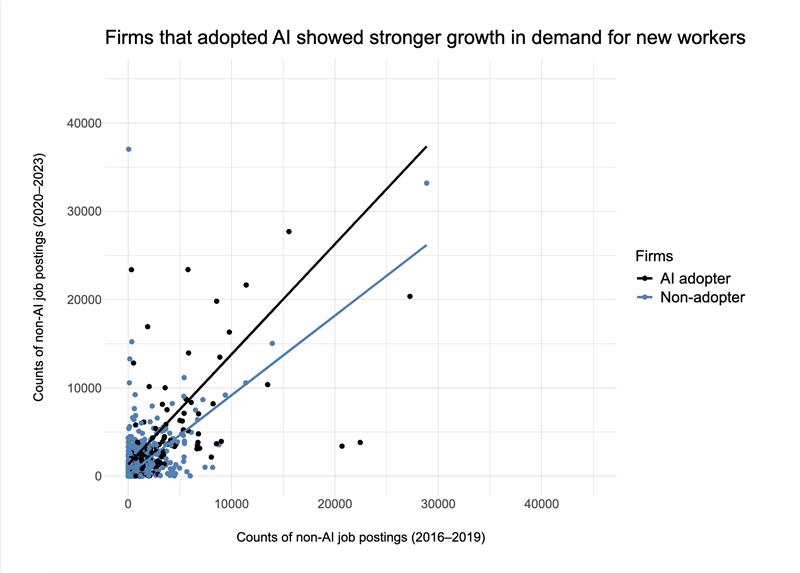
The robots aren’t taking over, it’s something far less dystopian. When CSIRO researchers tracked hiring data from 4,000+ Aussie firms, they found employers that adopted AI aren’t shrinking their teams, they’re hiring more. In fact, AI-powered firms posted 36% more non-AI job ads than those that ignored AI.
What businesses are really doing

“Rather than speculating about future impacts, the study focused on what employers were actually doing,” says Dr Claire Mason, lead author of the study and Workforce and Productivity research team lead at CSIRO.
The CSIRO team looked at the roles businesses were advertising and the skills they’re asking for.
Turns out, it’s a case of skill stack like your career depends on it. . . because it kinda does. Job ads across the board are now listing more skills, especially in companies using AI.
“What we’re seeing is workers being asked to bring more skills to the table, including the ability to work effectively with AI,” Claire explains.
Even more interesting? AI skills are popping up in places you wouldn’t expect. Not just coders and engineers, but sales reps, architects and security officers.
“The distinction between ‘AI jobs’ and ‘non-AI jobs’ is starting to blur. AI is becoming a core part of many roles, not a separate category,” says Claire.
Does that mean my future job is safe?
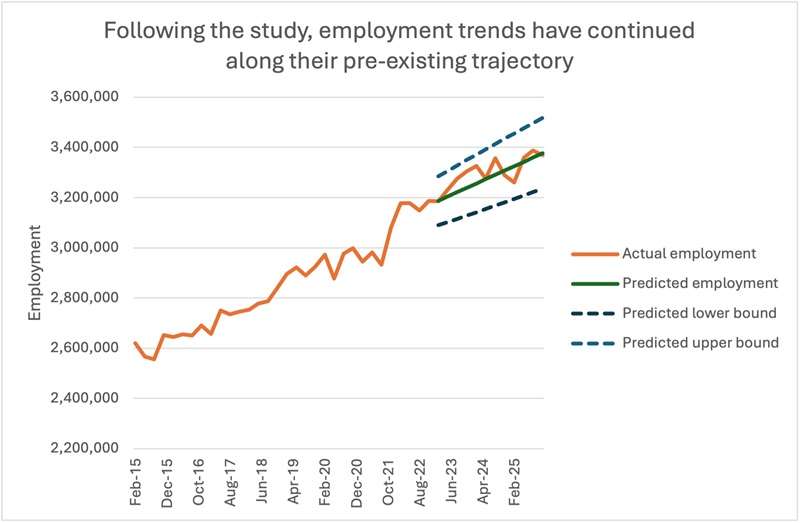
It’s not that AI replaces people. It’s that people – or companies – who ignore AI get left behind. Demand for certain roles dipped in companies that didn’t adopt AI, suggesting workers there could be at a disadvantage.
“AI-exposed workers may be disadvantaged if they’re in firms that aren’t using AI. Their peers in AI-adopting firms are potentially more competitive because they’re able to use these tools to augment their work,” says Claire.
The takeaway? Your future career isn’t about competing with AI. It’s about collaborating with it.
The big picture
Zooming out, this isn’t a one-off moment. It’s part of a bigger pattern. Every major tech shift, from the internet to smartphones, didn’t delete work. It reshaped it.
“The future of work includes human workers with inherently human skills, embracing technology like AI,” says Claire.
So start building those skills now. The edge will go to people who know how to work with AI, and bring their uniquely human strengths.
This article is adapted from a news article by CSIRO. Read the original article here.