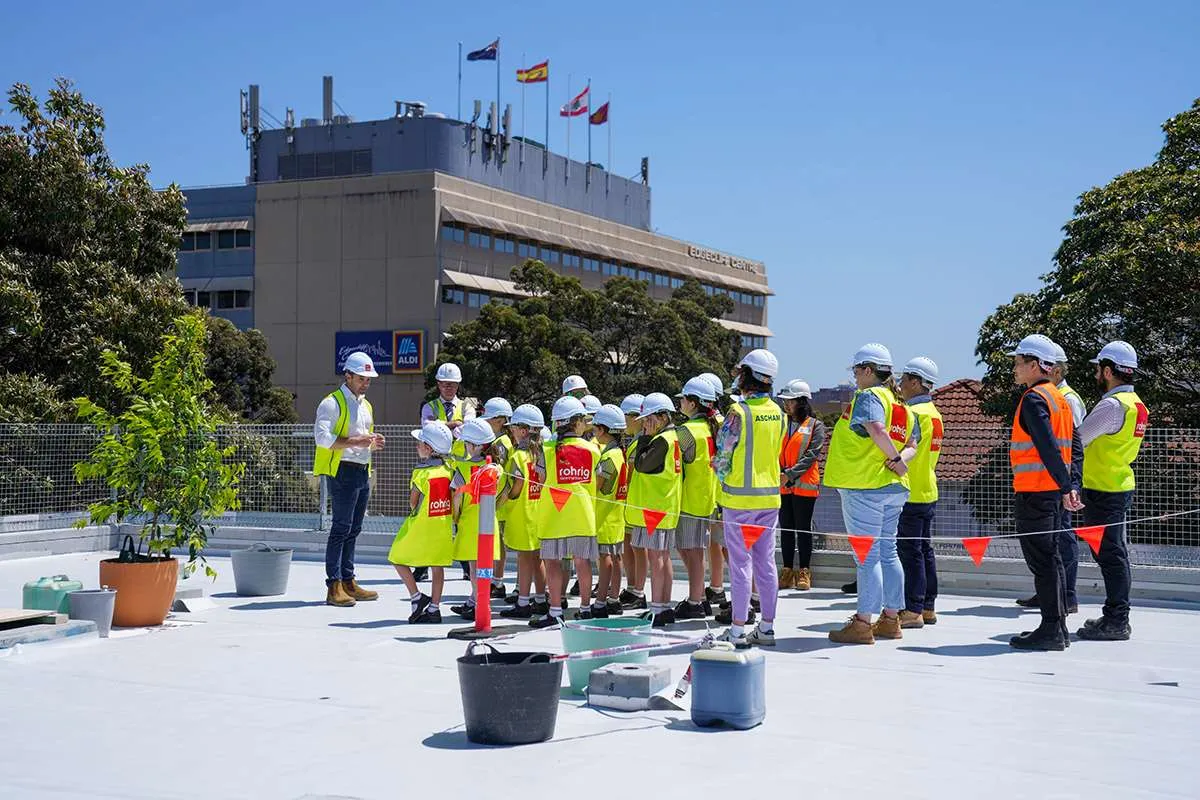
Engineers are the innovators in the workplace, introducing new ideas and products
When you study engineering, you learn a problem-solving approach that’s totally different from the way scientists, marketers or business-minded professionals approach
a problem. You learn to challenge what’s established and break big problems down into smaller ones. Wherever you work, as an engineer you are an innovator – disrupting the way things are and creating a better way of doing things.
You’ll be in demand from day one – and work with a mix of people, from those just starting out like you, to the people calling the shots. And it couldn’t be more rewarding! You’ll work in major companies creating new ideas to transform workplace processes, technologies and ideas.
Think like an engineer

Neuroscientist, engineer and entrepreneur Alan Finkel gives us an insider’s take on the key ways engineers work.
CwS: What is unique about the way engineers work when they’re approaching problems to be solved?
Alan: The art of engineering is optimisation. They say the art of politics is compromise, but believe me, there is no room for compromise in building bridges or computer chips. And there is no room for pursuing the other extreme – perfection – because it is simply too expensive and too slow. Good engineers genuinely believe they can create something new, better and more quickly than what’s come before.
CwS: Why is this important for society right now?
Alan: We face multiple global threats and unless we can find the workable middle ground, these threats will not be resolved.
CwS: What can you tell us about the key parts to the engineering ‘thinking process’?
Alan: Start with the belief there is always a better way. Then, the first step is to articulate the problem. Then analyse it and propose a solution. Too many people jump to a solution.
This article originally appears in Careers with STEM: Engineering 2021.
RELATED:
- Hang out with a chemical engineering student
- 5 minutes with UTS’s Women in Engineering and IT director
- Meet an engineer with a non-uni pathway