


You already know not to believe everything you see, right? With media literacy, you can learn to spot fake news
Today, artificial intelligence is more convincing than ever before. It writes text, generates images, clones voices and creates videos in highly realistic ways. These deepfakes are part of our lives and even experts are struggling to tell what’s real from what’s not.
The good news is that media literacy can help you tell fact from fiction. It’s a skill you can learn and improve. And it might be one of the most important skills yet for your future career.
What’s media literacy for?
Media literacy is all about analysing and evaluating any information you watch, read or listen to. It takes critical thinking to decode messages, identify biases, spot stereotypes and understand hidden messages behind the media.
It might be obvious that media literacy is important for journalists and librarians, but it doesn’t stop there. It’s a future skill used by everyone from cyber security specialists to intelligence analysts, scientists to teachers, lawyers to doctors. It’s for anyone who needs to separate what’s real from what’s not.
SIFT through the info
Media literacy isn’t about jumping to the conclusion that everything is totally fake. Instead, the key is thinking critically before you trust the information. One method for doing this is called SIFT.
- Stop: Pause before you react or share. If the information triggers intense anger, fear, or a desire to share, it might be sus.
- Investigate the source: Check out the author and publisher. Do they have the right expertise? Are other trusted outlets reporting the story too?
- Find other coverage: Are there multiple credible sources? This is better than relying on one post.
- Trace it back: Find the original claim and its context. Have images or quotes been stripped of their original meaning?
SIFTing through info will always beat believing everything you scroll.
Fake news
One reason media literacy matters so much today is the massive amount of fake news online. Worried about falling for fake news? Instead of mythbusting or debunking after you’ve already fallen for misinformation, try prebunking.
Prebunking helps you recognise common manipulation techniques before they fool you. Think of it as giving your brain a practice run before the boss challenge.
One fun way to build this skill is by playing Bad News, a free online game where you become the creator of fake news. By spreading increasingly outrageous misinfo, you’ll learn the tricks that scammers, conspiracy theorists and bad actors use online.
The game is surprisingly funny, a little hectic, and most importantly? Research has found that playing Bad News help people better recognise common misinformation techniques.
Keep up! AI is getting smarter
One of the fastest-evolving media literacy skills is recognising content created or manipulated by generative AI. If you think it’s easy, with weird hands, strange teeth and mismatched earrings, think again. New research from the Australian National University (ANU) has found that looking for these obvious visual glitches is no longer enough.
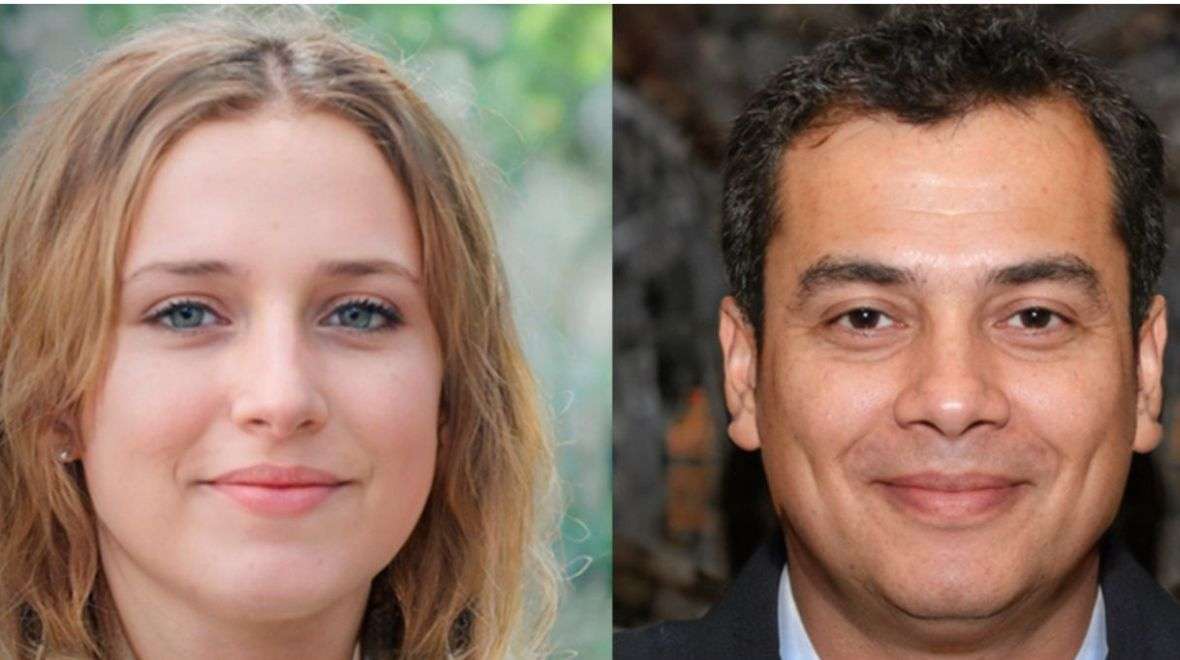
Instead, ANU researchers successfully trained people to detect subtle clues that distinguish AI-generated faces from real ones. Even short training sessions improved people’s ability to spot convincing AI images.
So what do you need to look for these days? Turns out, human faces are more expressive, distinctive and memorable. AI faces are more symmetrical, proportionate and attractive.
The good news is that all participants trained to identify these 6 qualities improved their skills. The best performers achieved near-perfect detection of AI faces.
“It was amazing to see the dramatic improvement,’’ says lead researcher, Associate Professor Amy Dawel. “We’ve shown our training is effective for some of the most convincing fakes available. Now we need to find out whether that training generalises to other AI-generated faces.”
The researchers say these findings could help protect people from scams, identity theft and misinformation as AI-generated content becomes more common online.
That doesn’t mean you’ll become an AI detector overnight. But it does show there are aspects you can learn and practice.
P.S. Over 18? You can register to participate in AI face detection training or other AI face studies!
The future belongs to critical thinkers
Fake news and misinformation have been around for centuries. That said, we’re living in an age where AI is taking off at hyperspeed and information spreads fast. That means media literacy is more important than ever.
We trust that generative AI is going to be part of almost every career, from medicine and engineering, to maths and environmental science. Learning when not to trust the machines might be even more valuable.
So, the next time something online makes you gasp, laugh or instantly want to hit share, pause for a sec. You might be better off relying on your brain than your computer.
Answer: Both faces above were AI-generated using StyleGAN3!







