Here’s how teachers can let students wrestle with a problem before rescuing them
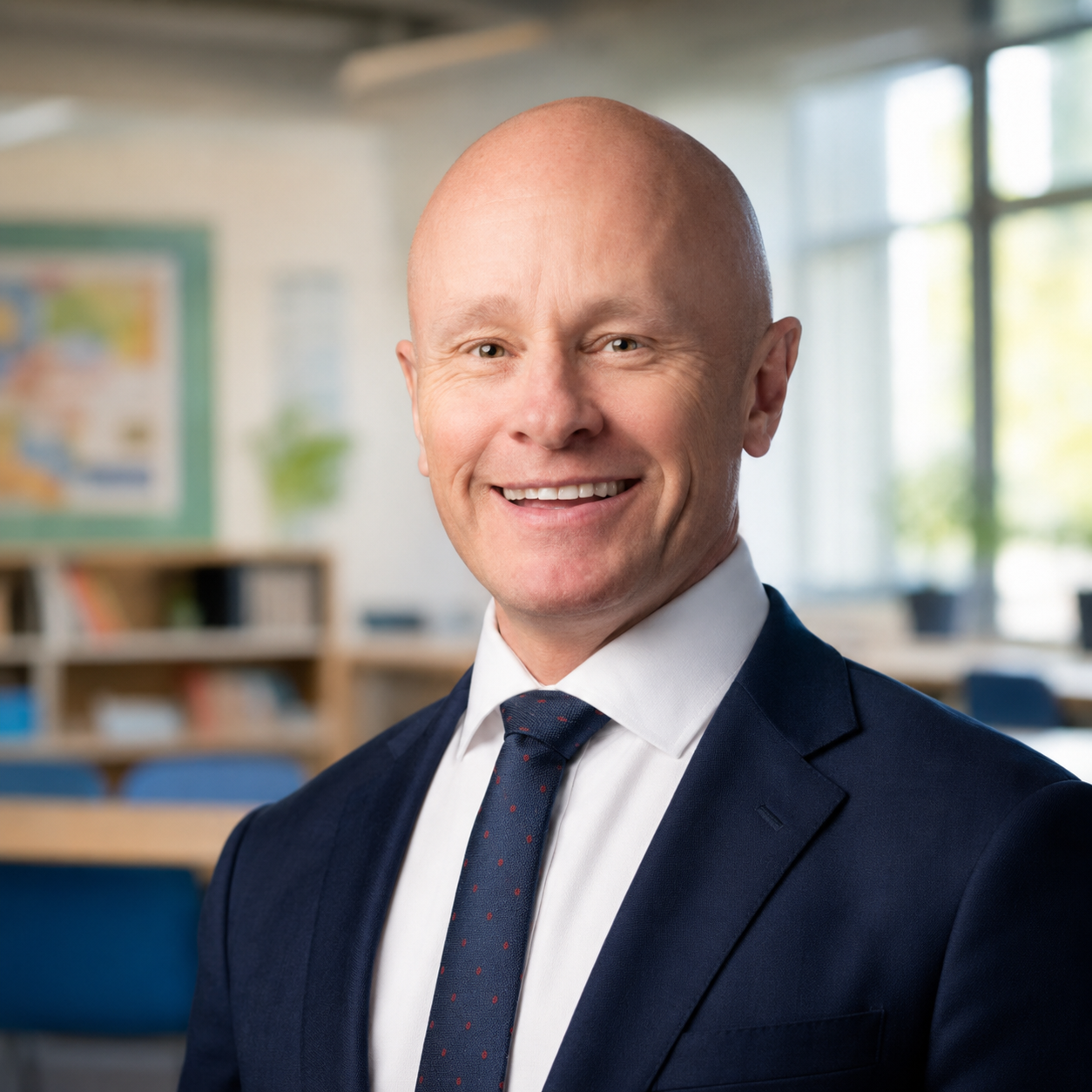
By James Lister, National Head of Curriculum at Twinkl Australia
“What’s the answer?” For generations, that has been one of the most familiar questions in mathematics and science classrooms.
Of course, answers matter. Our students need strong foundations in mathematics and science. They need knowledge, fluency and the confidence to apply what they know.
But I wonder whether, in our determination to get students to the right answer, we have sometimes underestimated the importance of the question.
What if our classrooms have become so good at rewarding answers that we’ve inadvertently taught students to be cautious about asking questions?
Because the future of STEM will not belong only to the people who can answer the problems, we already know how to solve. It will belong to people curious enough to find the problems we haven’t thought of yet.
Curiosity is serious business
Spend time around young children and curiosity is everywhere.
Why is the sky blue? How does that work? What happens if I do this? Why can’t we try it another way?
There is something wonderfully relentless about it. And, importantly, something fun.
Then somewhere along the educational journey, learning can become more cautious. Hands go up when students know the answer rather than when they have a question. Getting something wrong becomes something to avoid. And subjects such as mathematics can begin to feel like a test of whether you are a “maths person” or not.
We should be deeply uncomfortable when a 12-year-old has already decided that maths and therefore potentially engineering, technology, data or science simply isn’t for them. That should concern us.
Australian data from PISA 2025 tells us that around 79% of Australian 15-year-olds describe themselves as curious about many different things, while 80% say they like knowing how things work.
That curiosity isn’t educational fluff. Students reporting higher levels of curiosity also performed better in mathematics.
Perhaps even more interestingly, Australian students are exceptionally strong creative thinkers. Forty-three per cent were classified as top performers in creative thinking in PISA 2022, compared with an OECD average of 27%.
And here is the statistic I think should make educators sit up: only around one-quarter of Australia’s top creative thinkers were also top performers in mathematics.
Being a brilliant creative thinker does not require being the student who always gets the maths question right.
That matters when we think about who gets to see themselves as belonging in STEM.
Tomorrow’s STEM needs more than calculators
The world our students are entering is changing extraordinarily quickly.
Artificial intelligence, automation and new technologies are reshaping occupations and the skills required within them. Jobs and Skills Australia report that generative AI is currently augmenting rather than simply replacing work, increasing demand for digital literacy alongside distinctly human capabilities.
We cannot confidently predict every career that will exist when today’s students are 30 or 40.
But we can be fairly confident about the people we will need. People who ask good questions. People who notice patterns. People who can work with others. People who are prepared to test an idea, discover it doesn’t work, and try again. People who can combine knowledge with imagination. That is STEM too.
The scientist whose experiment fails has learnt something. The engineer whose prototype doesn’t work redesigns it. The coder debugs. The mathematician tries another approach.
Perhaps one of the most important things we can teach a young person about STEM is that “I don’t know” is not the end of learning. It is often where the interesting part begins.
Teachers can make curiosity contagious
This is where STEM teachers have extraordinary influence. A teacher can change not only what a student knows about a subject, but how that student sees themselves in relation to it.
We can praise the student who reaches the correct answer. But we can also notice the student who asks the unexpected question. We can ask, “How else could we solve this?” We can let students wrestle with a problem before rescuing them.
We can connect mathematics and science to things students genuinely wonder about: sport, space, gaming, climate, medicine, design, artificial intelligence, music or the technology sitting in their pocket.
And occasionally, when a student asks a brilliant question, perhaps the best answer a teacher can give is: “I don’t know. How could we find out?” There is enormous power in those words.
That can require something surprisingly difficult of us as teachers: resisting the urge to always be the person in the room with the answer. Sometimes the most powerful thing we can model is curiosity itself.
There are also more resources available than ever to help teachers bring this thinking into the classroom, including STEM activities and real-world learning resources.
Let’s build classrooms where questions are celebrated alongside answers; where getting something wrong is part of figuring something out; and where creativity is not confined to the arts any more than problem-solving is confined to mathematics.
It’s to keep their curiosity alive long enough for them to discover where it might take them. Because the next great STEM career might not exist yet.
Our job isn’t to convince every young person that they should become a scientist, mathematician or engineer. Nor is it to make every student love every maths lesson. Perhaps our responsibility is simpler: don’t let them decide too early that STEM isn’t for them.
Keep their curiosity alive long enough for them to discover where it might take them. The curious mind that will help create it is already sitting in someone’s classroom
James Lister is National Head of Curriculum at Twinkl Australia, a global educational publishing and technology company providing teachers with more than one million teacher-created resources, including lesson plans, worksheets and digital learning tools.