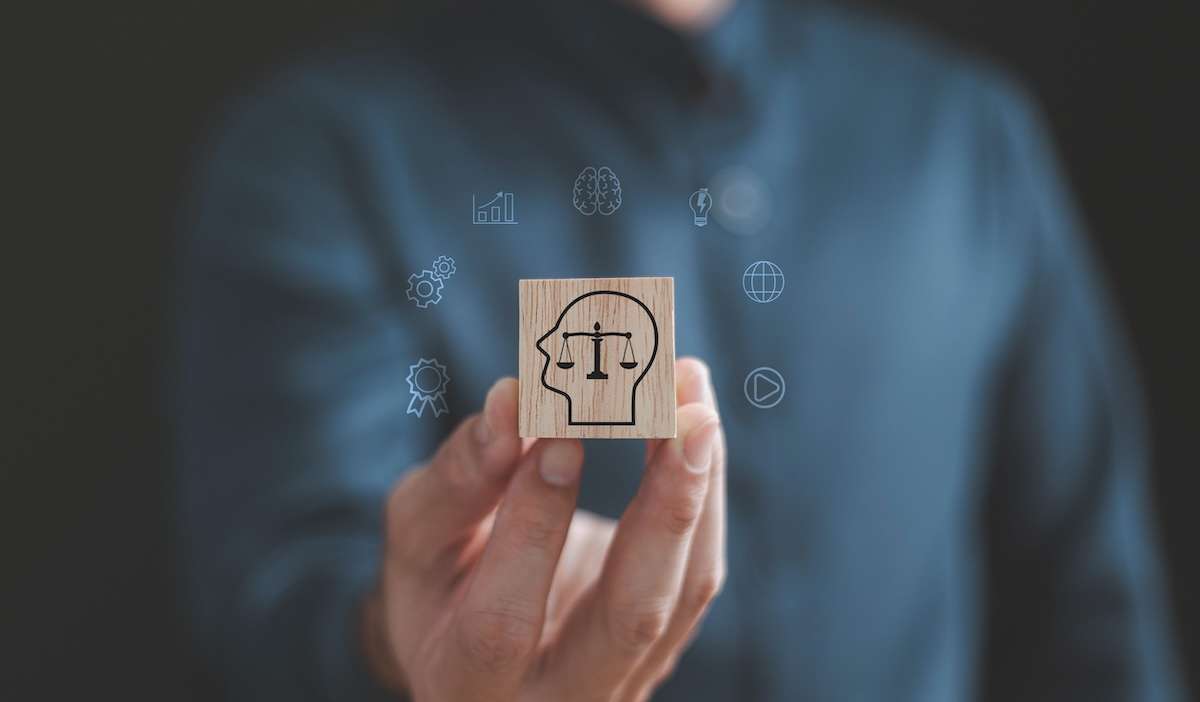
Ethics is exactly what’s needed in artificial intelligence! Get the basics in this article
Get the basics
Who
An AI ethicist
What
Someone who specialises in the ethics around AI development and implementation, plus studies and identifies ethical or moral issues that may arise. They present their findings to governments and businesses to help them make informed decisions. Mixing their understanding of ethics with tech skills makes them extremely valuable as AI systems advance, gain autonomy and new concerns come into play.
When
We need AI ethicists now! But don’t worry, it’s set to be an in-demand career going forward too. The 100 Jobs of the Future report places ‘robot ethicist’ in the top technology jobs of the future. That role involves looking at ethical issues associated with artificial intelligence, robots, cyborg technologies, and augmented/virtual reality.
Where
AI ethicists work for governments, tech companies, research institutions and businesses.
Why
We need to make sure new tech is safe and beneficial to humanity, with ethics built in from the beginning. It’s also crucial that AI systems follow the law, otherwise there can be legal consequences for those making and using the tech. AI ethicists can come up with development guidelines and standards too, so issues can be caught early in the development process – saving an organisation time, money and harm to their reputation and protecting those that their work impacts.
How
To become an AI ethicist, you’ll need to study artificial intelligence at uni. Macquarie University has an excellent Artificial Intelligence major, which you can take as part of the Bachelor of Information Technology. To further explore ethical and legal questions surrounding the use of AI, consider a double major of AI + Philosophy or AI + Applied Ethics. Macquarie University ranks 35 in the world* for studying philosophy so it’s the place to be for the philosophy and computing skills stellar AI ethicists need!
Real-life scenarios

Here are two examples of where an AI ethicist could have been a good hire as they would have predicted the implications of the systems these companies used
Kmart and Bunnings
rolled out facial recognition software to reduce theft, then stopped due to privacy law concerns.
Amazon
used an AI recruiting tool that showed bias towards male candidates.
AI by the numbers
There are SO many ways for an AI ethicist to make their mark!
A$22 trillion
How much the CSIRO estimates that developing and commercialising AI will add to the global economy by 2030.
A$3.6 billion
Australian spending on AI systems will grow to this amount by 2025.
90%
The percentage of employers who envision their companies becoming AI-driven by 2028.
84%
The percentage of Australian knowledge workers already using or experimenting with generative AI (like ChatGPT) in the workplace.
Top 3 AI areas
The Australian Government is focusing on these areas of AI to transform existing industries and build new ones.
- AI for better health, aged care and disability services
- AI for better towns, cities and infrastructure
- AI for better natural resource management
No doubt these industries will need AI ethicists to help them along the way!

Your dream job
This is an amazing study and career path for you if:
- You’re motivated by fairness and building a better future
- New technology fascinates and excites you
- You love working in teams
- Open-mindedness, integrity and honesty are some of your best traits
- You know how to effectively communicate ideas
- No detail ever escapes you
- You can think creatively
Skills that pay the bills
- AI specialist: $61K-$153K
- Ethics officer: $76K-$105K
*Salaries sourced from Payscale/Glassdoor
This article was first published in the AI Ethicist Job Kit, created in partnership with Macquarie University.