Want a job where you’ll be actively trying to make the world a better place? Jump on a science + environment study and career path!
From helping mitigate the effects of climate change (wild weather, anyone?) to solving mysteries like tar balls washing up on beaches, people working in science + environment are pretty busy saving the planet right now. And they’re in demand too – it’s projected there will be a 7.7% employment growth in this field by 2028!
What’s even better is that if you want to join forces with these real-life STEM superheroes, there are stacks of different roles to choose from and lots of study pathways that can take you there, from aquatic ecologists to sustainability officers!
As an environmental scientist, your days will be filled with looking at and measuring the impact of development and human activity on the environment. Your insights will be used to help make policies and plans to help the environment, as well as educate the public about exactly what is taking place.
Oh, and a science + environment career is a great option if you want to work outside! Sure, there will still be desk work involved, but you’ll also get to take part in monitoring habitats, collecting specimens from waterways, and assisting with environmental emergencies like oil spills.
Science + environment school subjects
Get a head start on your career while still at school by taking lots of science electives in Year 11 and 12. While each qualification or degree may have prerequisites (and we highly recommend you check these with your vocational education and training institute or university of choice), it’s good to start immersing yourself in the science world as soon as you can. It will give you a solid knowledge base for when you start your tertiary studies. Consider taking subjects like earth and environmental science, as well as biology. Chemistry and physics can also be useful, depending on the field you want to get into. And don’t drop maths! It’s the language of STEM and will help you with the problem-solving skills you’ll need on the job one day.
Meet people working in science + environment
Kinjia Munkara-Murray
Aquatic ecologist

Kinjia kickstarted her career at engineering consultancy GHD where her job involved studying the health of waterways around Victoria by monitoring populations of ‘macroinvertebrates’ – aquatic lifeforms including insects and crustaceans.
“Studying insects is my passion, and being able to work with them on a daily basis is the absolute best part of my job,” she says.
She is now a Traditional Owner Partnerships Officer at Melbourne Water.
Check out her STEM journey here.
Gidyea Venner
Graduate hydrogeologist

As part of his role working at AGE Consultants (Australasian Groundwater and Environmental), Gidyea has helped to supervise drilling efforts on wells for major infrastructure projects in Queensland.
In this job, he advised on casing and development, as well as coordinating regular sampling and monitoring tests.
Gidyea’s favourite thing about working in this field is being in new environments all the time.
“Plus, continuing to operate within the cultural interface between Indigenous and Western knowledge systems whenever I have the opportunity.”
Read more about his career here.
Danielle Udy
Antarctic climatologist
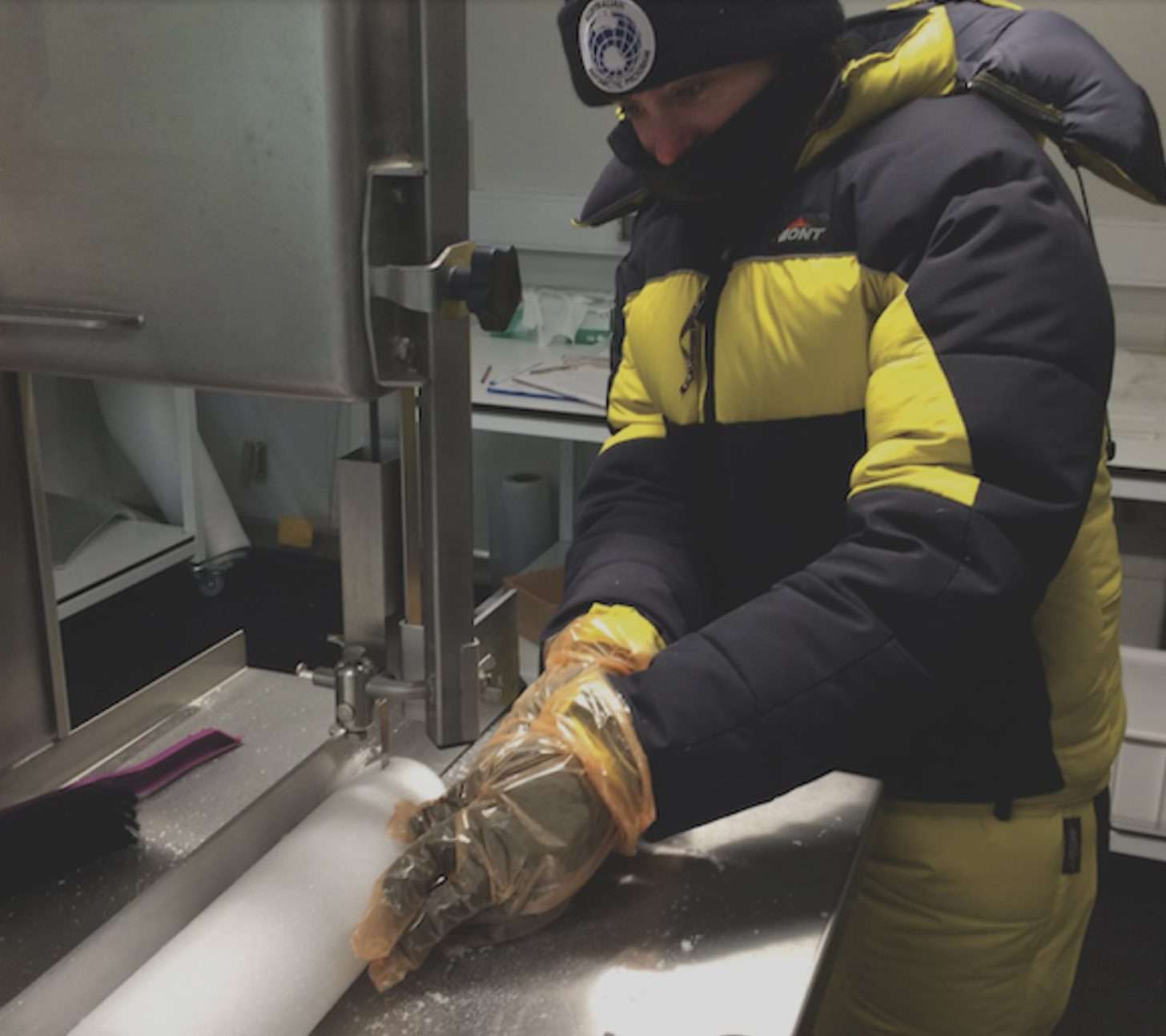
As an Antarctic climatologist, Danielle works with Antarctic ice cores in the -20°C freezer at the Institute for Marine and Antarctic Studies in Hobart.
“We are developing a new ice core climate proxy for extreme weather events in Antarctica to be able to see how the snowfall onto the ice sheet changed before satellite observations became available.”
Learn more about her job here.
Start your career here
Science + environment + study
- Bachelor of Environmental Science, Edith Cowan University
- Bachelor of Environmental Science and Management, Charles Sturt University
- Bachelor of Science Advanced (Honours) (Environmental Science), QUT
- Certificate III in Conservation and Ecosystem Management, TAFE SA
- Diploma of Environmental Monitoring and Technology, TAFE WA
Science + environment + jobs
- Conservation officer: $57K–$128K
- Ecologist: $55K–$83K
- Environmental scientist: $60K–$102K
- Hydrogeologist: $67K–$134K
This article first appeared in Careers with STEM: Science 2025