Wondering how your dream uni stands against the world in this year’s rankings? We’re here to help
Choosing the right university can be a stressful process, especially when pursuing your dream STEM career. Firstly, take a breather, we’re here to break it down!
So out of 45 universities across Australia and New Zealand, 10 universities scored in the top 100 from the QS World University Rankings 2027. So, how are university rankings measured? For QS, they find this through measuring a university’s student experience, partnerships, research activity and faculty qualifications.
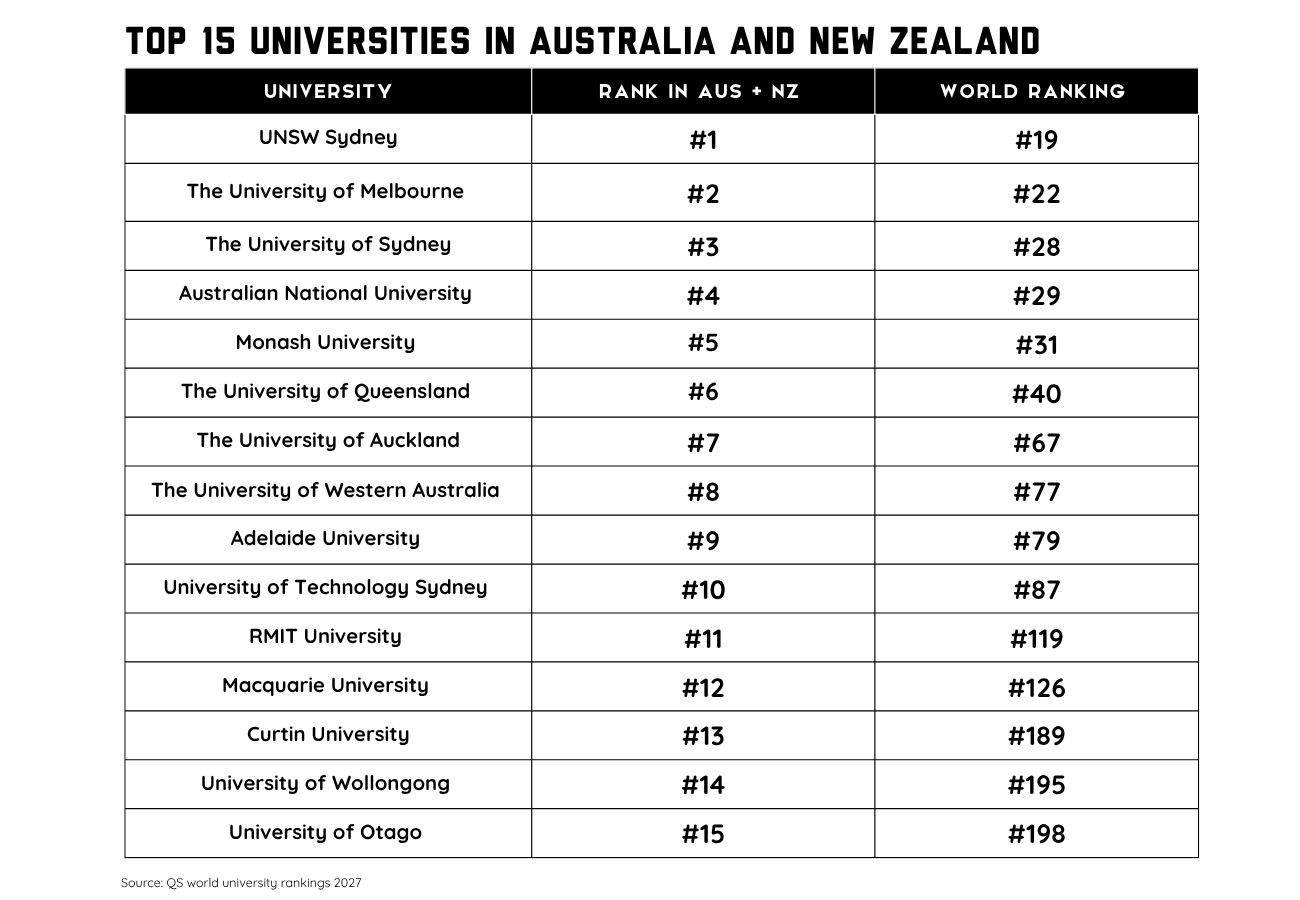
Should I care about rankings when it comes to my dream uni?
In the grand scheme of things, rankings are not the be-all and end-all, but here’s how rankings can be helpful:
- Global recognition: higher rankings mean stronger academic reputations, better research opportunities, and more resources. This could mean better STEM facilities, cutting-edge research, and even engaging student clubs and events.
- Employability outcomes: Many high-ranking universities have industry partners with whom they collaborate to provide work placements for students. This can include top companies like ANSTO, CSIRO and Telstra.
- Networking opportunities: You’ll connect with ambitious classmates, supportive teachers, and a vast network of successful alumni who are all keen to help each other succeed.
- Program and scholarship opportunities: These top schools often attract more funding, which means wider opportunities for students to apply for programs and scholarships.
Prestige isn’t everything. What else should I consider when choosing my dream university?
When choosing your dream university, it should be about what they can offer you. It ultimately comes down to the STEM major or career path you want. For example, the University of Melbourne may be a great choice if you want to study general science, but for engineering you might choose UNSW Sydney.
- STEM major: When considering a university, dig into what they specialise in. Some universities that aren’t in the top rankings could be world leaders in other areas, such as aerospace engineering, psychology, or environmental science. Check course content, faculty expertise and ask questions at your next open day.
- Student experience: There’s more to university life than academics. Check if there is a lively campus with regular events. Look at clubs and societies, to see if they have ones that you are interested in.
- Life circumstances: Do you need to be close to home? Need a flexible study arrangement? More prestigious universities are often located in inner-city areas (fewer in regional areas) and have inflexible study arrangements, which can make it challenging if you’re working full-time, have health or mental health issues, or are a carer. Check if a university offers student support, flexible study arrangements, and aligns with your lifestyle.
In the end, rankings are useful, but remember. The best university is the one where you feel supported, gain valuable experience and are inspired to pursue your STEM dreams. That might be at a top university or a hidden gem perfect for you.