
Australia’s latest STEM Equity Monitor report is here. So what’s the score? STEM still needs a greater diversity of people, perspectives and big ideas
It’s time to delve into some data from the annual STEM Equity Monitor, because STEM needs you. Australia’s fast-growing sectors – from space to advanced manufacturing, quantum technologies to cybersecurity – are crying out for more diversity. After all, more diversity means more ways of thinking, designing and problem-solving.
The STEM Equity Monitor captures changes and trends over time in key sectors and career phases. So what’s new this year? The latest stats show that women make up approximately 300,000 of the 1.8 million people in the STEM workforce.
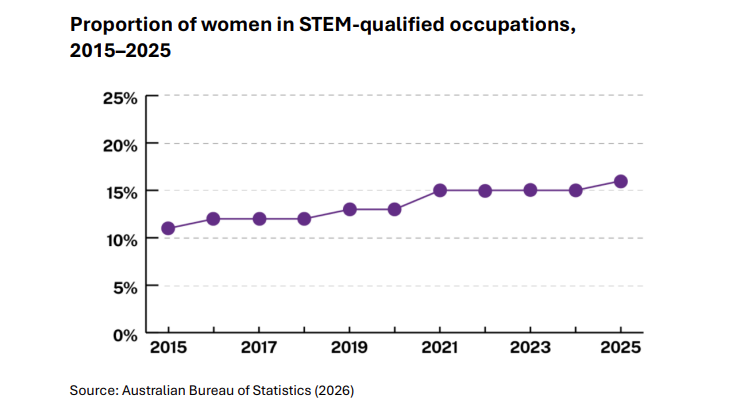
It sounds like a lot, and the number has grown by 92% in a decade. However, women still make up just 16% of people in STEM-qualified occupations, with plenty of room to grow.
The full report shows a complex picture, and there’s still plenty of change needed. For example, gender pay gaps and unequal access to leadership remain stubborn problems in STEM.
However – importantly – the report shows that change is possible.
One key takeaway? Confidence ≠ ability
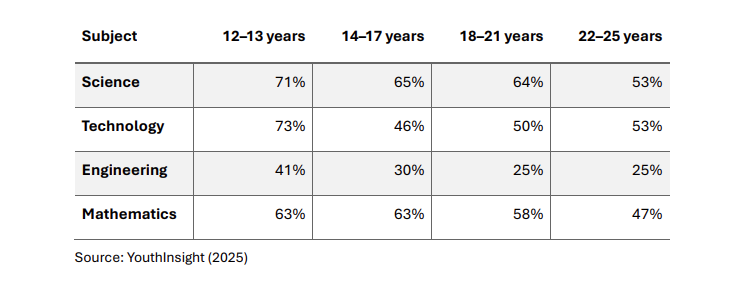
While there’s stacks in the report, one interesting thing we noticed is that girls’ confidence in STEM generally drops as they get older. While 71% of the surveyed girls aged 12–13 felt confident in science, it dropped to just 53% in those aged 22–25.
So, this is your semi-regular reminder to “fake it till you make it”. Being unsure and being unable are different things! Think back to your younger self and borrow some of that confidence.
Girls’ confidence in STEM subjects at different ages
In addition, almost half of the girls who didn’t plan to continue with STEM said they didn’t think they were smart enough. Here at Careers with STEM, we want to challenge this. It matters because students who don’t believe they are “STEM people” may rule out subjects and even careers before they’ve had an opportunity to discover their personal strengths.
That means it’s time for a pep talk, and we’ve got your back. Try reading this message from astronaut Katherine Bennell-Pegg in the latest issue of Careers with STEM: Engineering. And remember, change is possible.
Read more
- STEM Equity Monitor 2026
- Careers with STEM: Engineering 2026
- Shoot for the stars: become an astronaut, with Katherine Bennell-Pegg