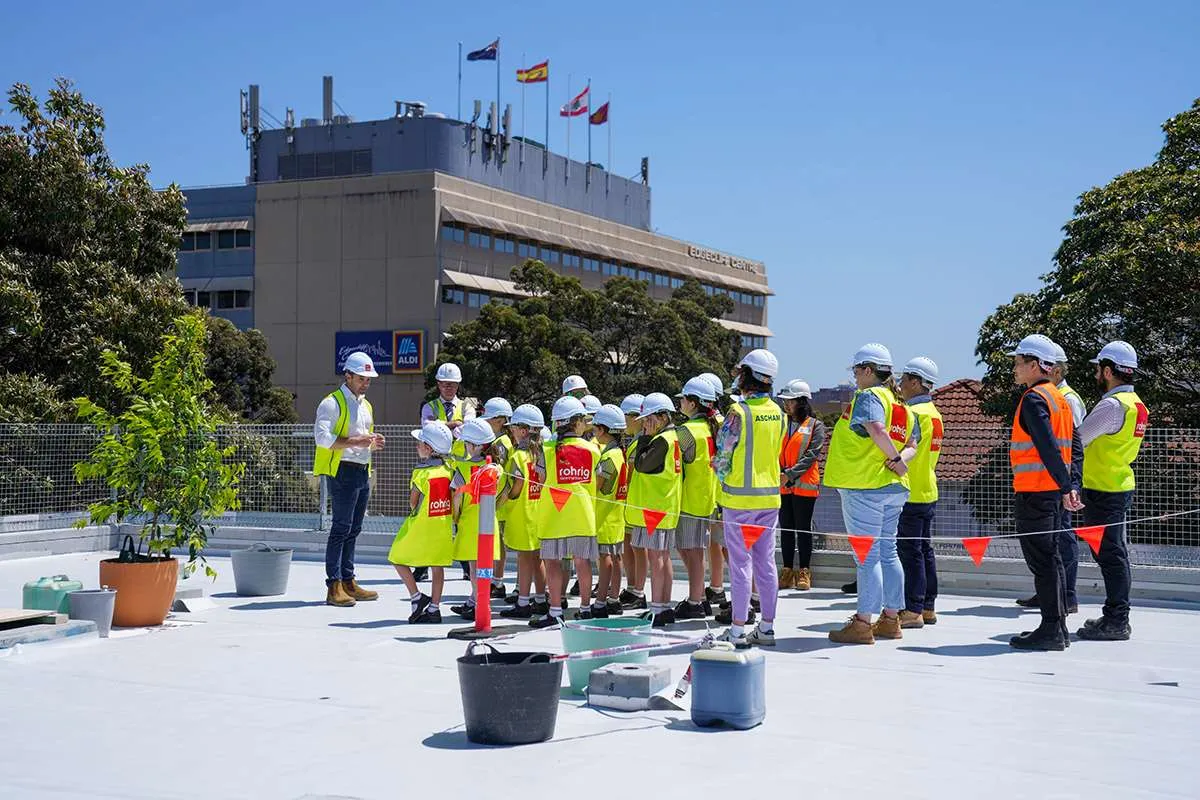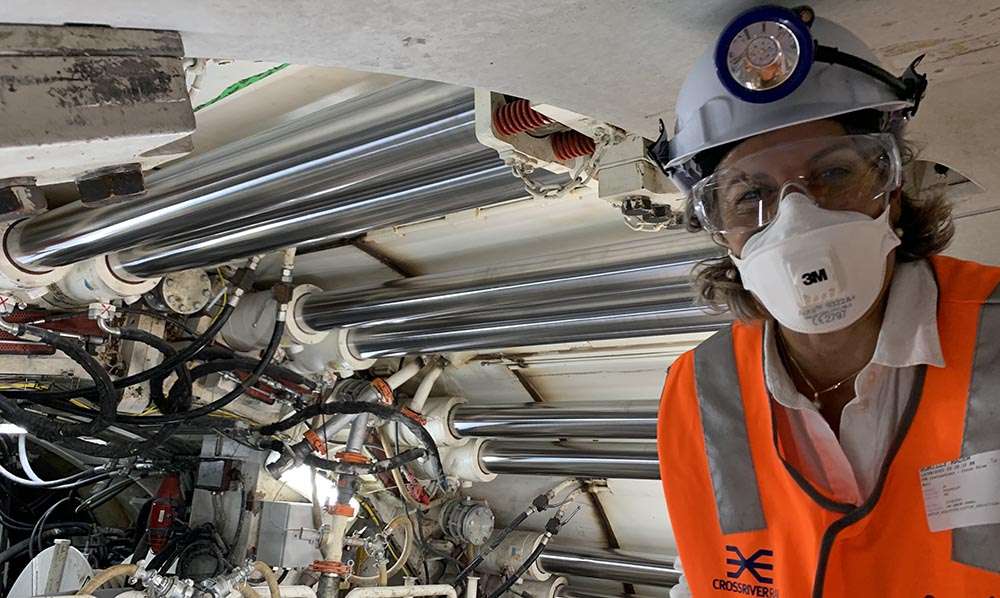
Getting girls into engineering means making it more accessible, seeing it as a ‘creative’, ‘fulfilling’ and ‘exciting’ career area and busting myths about seeing engineering, physics and maths as ‘hard and challenging’, according to new research.
“Findings from the government’s STEM equity monitor and Engineers Australia research are a call for swift political action to stem the gender imbalance and, drive a new generation of women engineers,” says Engineers Australia’s CEO Romilly Madew.
Interested in Engineering? Check our our latest issue of Careers with STEM: Engineering, or browse the careers of our awesome role models.
The STEM equity monitor tracks gender in STEM enrolments and careers and reports on this each year. 2022’s stats showed a jump in enrolments from 24% between 2015 and 2020! That’s the great news. The not so great?

- Only 31% of girls and were interested in studying engineering, compared to 62% in science.
- Women make up 48% per cent of Australia’s workforce, yet account for just 13% per cent of the nation’s working engineers.
Getting girls into engineering means starting young, says CEO
There are five engineering myths we need to bust to encourage more girls to get into engineering, says Romilly.
1. Lack of familiarity.
Engineering isn’t part of the school curriculum and many girls are unaware that engineers can works as process engineers for food companies like Mars, develop new medicines as a biomedical engineer, or test out the latest high-tech planes for Defence for example. The Engineers Australia research showed there is a strong correlation between familiarity with engineering and choosing to study it: 65% who were familiar considered studying engineering compared to only 11% that were not at all familiar, the research found.
“Most young girls think it’s all about the hard hats. But there is environmental engineering, biomedical engineering, software engineering – everything we do and touch – take our phones for example – is there because of engineering. There are so many types of engineers!” adds Romilly.
2. Not enjoying or being good enough at maths and physics.
Sure maths and physics are important but you don’t need to be top of the class. If you don’t get the required ATAR, there are also a bunch of other options for getting girls into engineering, such as VET paths or studying an Associate Degree in Engineering through TAFE or uni.
“Girls have the perceived myth that you need to be extremely good at maths and physics where as boys don’t have that. But you don’t need to be top of the class, you just need to have done them,” says Romilly.
“There are a myriad of ways to get into engineering. There’s professional engineering pathway – the 4-year university degree.
“But you could also do an associate degree, or a diploma of engineering. In some of those pathways, you might just have done basic maths. Our message is just continue to do maths – but you don’t need to the high unit maths or do physics.”
3. ‘Male dominated’ and ‘challenging’?
Many of us think of a male when we imagine an engineer. But while enrolments are skewed towards males, there are plenty of opportunity for non-male identifying people in engineering. Many unis have a women in STEM or women in engineering club or association (check out the full list here).
RELATED: More women are studying STEM, but there are still stubborn workplace barriers
4. Keep it positive.
Women are less likely to associate engineering with positive attributes such as ‘respected’, ‘impactful’, ‘creative’, ‘fulfilling’ and ‘exciting’. Meg Panozzo is an infrastructure advisory consultant with a background in engineering working for professional services firm RPS, and a part of Science & Technology Australia’s STA STEM Ambassador program, which pairs a STEM expert with their local Federal MP or Senator to provide ongoing STEM advice and insights.
“We need to talk about the positives as well – we need to showcase STEM in its whole breadth of possibility,” she says.
“STEM is an exciting way to make a difference, to creatively solve the world’s crises, and to satisfy our curiosity to be life-long learners.”
RELATED: How to save lives with clinical engineering
5. Making it an attractive option.
With Australia sliding deeper into in engineering skills crisis, attracting women to engineering is critical to meeting the engineering needs of our booming economy.
“We need to tell kids about the exciting opportunities there are in engineering,” says Romilly.
“We need to find out what kids are interested in and connect them to engineering. Careers advisors and parents need to find out what kids are interested in, and not just get them to focus on what they are doing well at.
“STEM in increasingly part of everything that we do. I naturally went into areas where I could make a difference in my own career, and I didn’t even know what engineering was when I as at school.
“There are many great and exciting opportunities in engineering. When we think of the jobs of the future – they are all around STEM.”
“The bridges we build to withstand floods, the QR codes we used during the pandemics, lifesaving drones we know use in rescue: engineers were involved in the making and designing of all of the things we use today to make a difference in the world.”
READ: 6 reasons to choose engineering
Keen on getting into engineering? Here’s where to start.
There’s a bunch of options open to you if you are considered study in engineering.
READ MORE: