


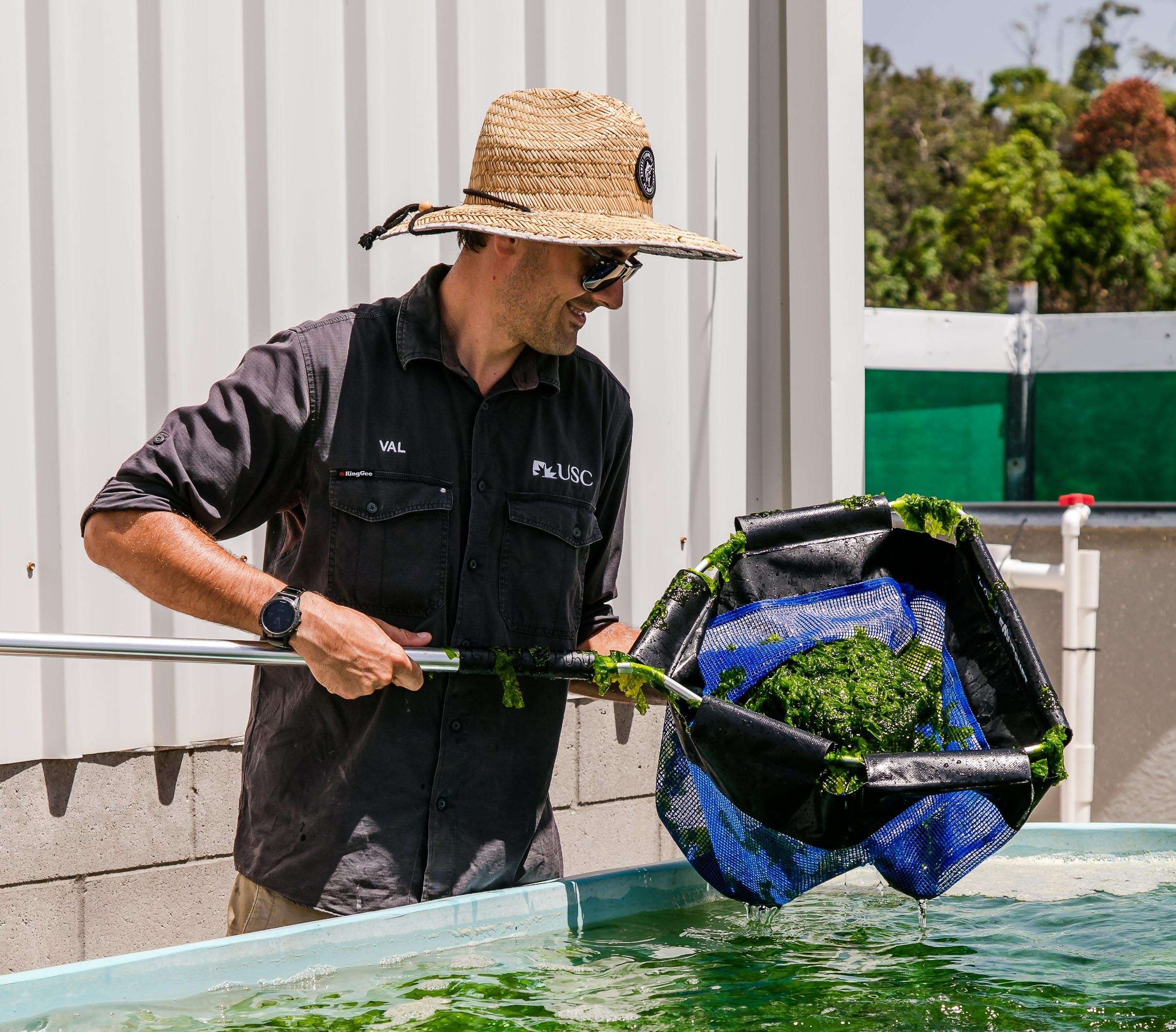
What do rabbitfish, microalgae and a remote tropical island have in common? Ask Val, aquaculture manager at Groote Aqua Aboriginal Corporation
Based on Groote Eylandt in the Northern Territory, Val is the General Manager at Groote Aqua. He’s helping to build a sustainable aquaculture industry that supports Traditional Owners as mining on the island winds down.
It’s a job with plenty of variety. “Every day is different,” he says. “Anything from fixing pumps and tyres to managing the systems that produce our species.”
So… what is aquaculture?
Val explains it simply. “Aqua is water and culture is farming. So we’re farming Sea Country.”
Instead of cows on land, think fish, sea cucumbers, oysters and seaweed. But Groote Aqua is not your typical fish farm.
“We don’t want to waste anything,” Val says. He points to a quote from the famous chemist, Lavoisier, “Nothing’s created, nothing is lost, everything is transformed.”
Rather than feeding one type of fish and letting waste flow into the ocean, Groote Aqua uses a multi-species system. Rabbitfish eat seaweed. Sea cucumbers act like “vacuum cleaners of the ocean”, digesting organic matter on the seafloor. Oysters filter the water. Seaweed absorbs dissolved nutrients.
The result? Water recycling with zero discharge since 2023, and a system designed to protect the pristine mangroves and reef nearby. “It’s a lot more productive than traditional aquaculture; all the wastes are resources. Just add sunlight and for the same inputs (power/water/food) you get 4 times the species you can grow and cleaner effluents than the water we pump in”.
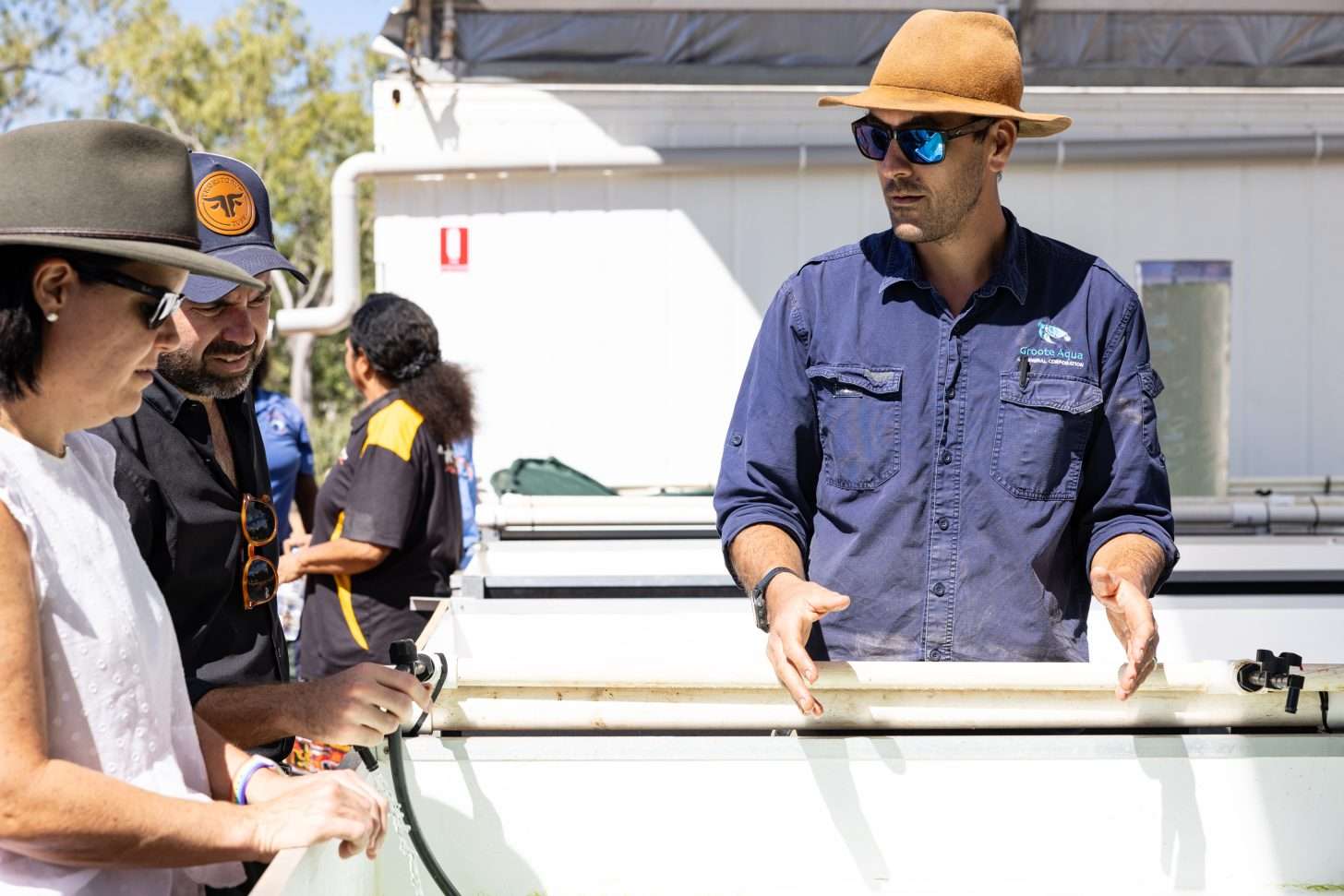
Built for community
Groote Aqua was created by the Anindilyakwa board members as a long-term plan for life after mining.
“We don’t want to build something that just makes millions,” Val says. “We want something that sustains an economy and services on the island, while looking after and preserving Sea Country.”
For Indigenous aquaculture technicians like Jason Bara, that matters. “It’s good,” Jason says of the job. “Better than working at the mine, driving big trucks.” His work includes feeding fish, cleaning filters, growing seaweed and monitoring water quality. It is hands-on, practical and close to home.
Top tips
Val’s advice? “Keep asking questions. Reach out. Put yourself out there. If you don’t, no one will know you exist.”
Val’s pathway
- Bachelor of Science (Aquaculture), James Cook University
- Hatchery Technician, James Cook University
- Graduate Certificate of Research Methods (Aquaculture), James Cook University
- Senior Research Assistant, MBD Energy
- PhD (Aquaculture), University of the Sunshine Coast
- Aquaculture Coordinator, Anindilyakawa Land Council
- Aquaculture Manager, Groote Aqua Aboriginal Corporation







