Maybe that’s why it feels so confusing to think about a Career in STEM
If you’re a young person considering a career in STEM, you could be forgiven for feeling a little confused. One day you’re told Australia desperately needs more scientists. The next, you’re reading about job cuts at CSIRO, university restructures or uncertainty across the research sector. If you’re wondering about how this relates to falling in love, read on.
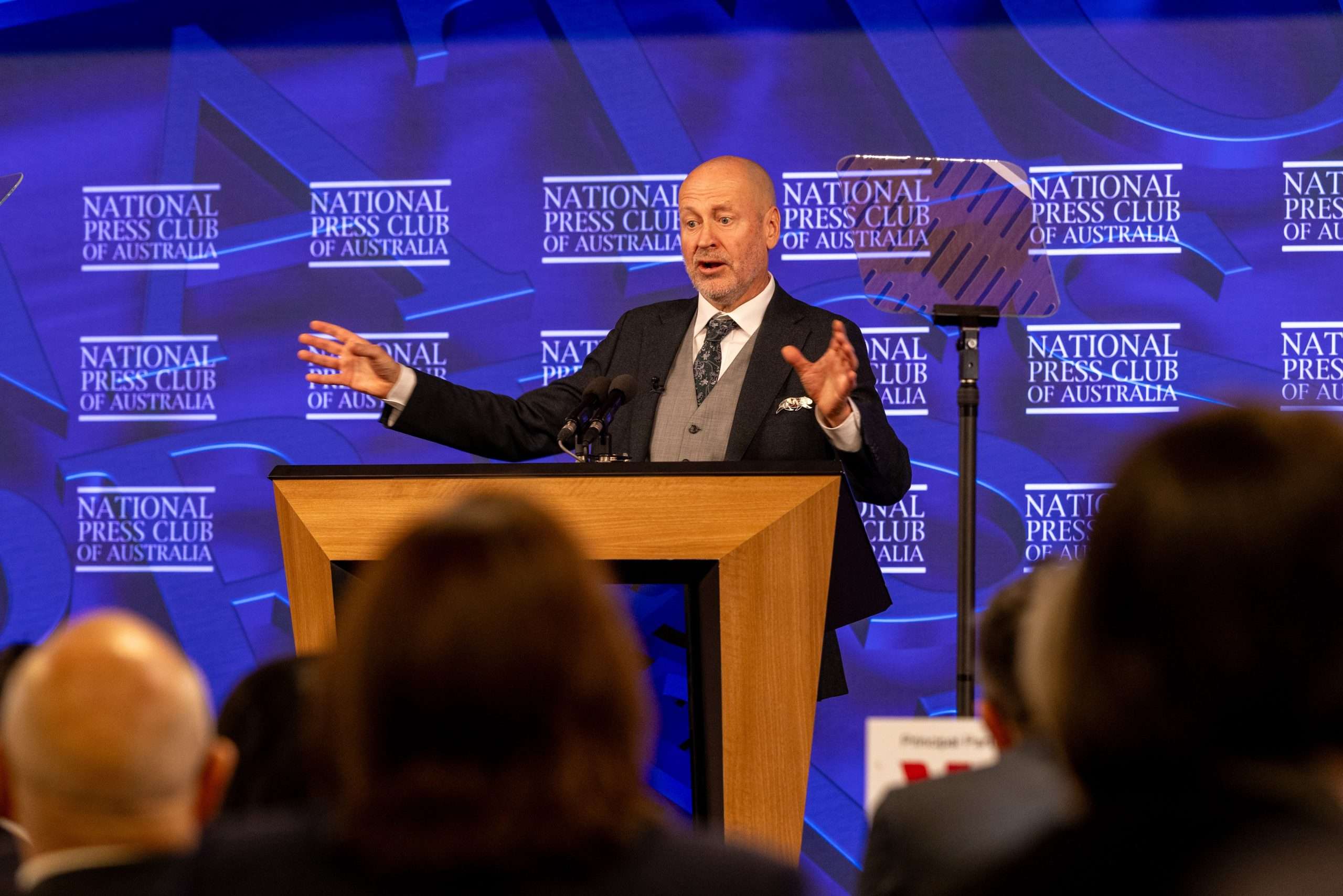
Today, the Chief Executive of CSIRO, Dr Doug Hilton, addressed the National Press Club. In his speech, he talked about how he began in the sciences.
“As a 16-year-old, my wonderful year 12 biology teacher, Miss Holland – who I can now call Libby – gave me a lot of latitude and allowed me to obsess about the biochemistry of life: DNA, RNA and proteins,” says Doug.
“Second, as a 19-year-old, I stumbled into working in a lab at the ANU over summer. That lab worked on blood cells, and the only way I can describe it is that it was like falling deeply in love.”
Is science your perfect match?
Want to be an eligible bachelor (of science)? Science & Technology Australia estimates Australia will need another 550,000 bachelor-qualified STEM professionals by 2035. Yet at the same time, one in three STEM professionals is considering leaving the sector.
For students choosing high-school subjects, applying for university or wondering whether to pursue research, that’s a difficult tension to ignore.
If Australia needs STEM talent so badly, why doesn’t it always feel like science has a secure future? “Discovery and progress are rarely made by following the same old comfortable path,” says Doug. That was the gist of his justification for the radical job cuts and restructuring the organisation has faced in recent years.
Doug says he hopes we’re facing a turning point for CSIRO. “Imagine future generations looking back on this decade, as the moment Australia decided that curiosity, ambition and audacity were our greatest national assets.”
A future with CSIRO
So what kind of scientific future is CSIRO trying to build? Doug calls for us to imagine:
- An Australia powered by abundant, affordable, and reliable clean energy.
- Minerals essential for the world’s batteries, magnets and electronics coming out of the ground in Australia, and staying here to be refined.
- Knowing our oceans as well as we know our land, protecting species we treasure, sustainably feeding a growing population, and supporting thriving industries.
- Redesigning crops and farming systems for the climatic conditions of the future, while producing more food, using fewer resources.
- Having a DNA library of every plant and animal on our continent, combined with autonomous systems to monitor biodiversity.
- AI accelerating discovery, drawing insights from a wide range of disciplines and datasets.
- Learning from Indigenous people and 65,000 years of experience, and weaving this together with emerging technologies.
CSIRO could sit at the centre of that story, but it requires long-term commitment. Not just from our national research agency, but also from people who are willing to become our next generation of scientists.
“We have young people coming through school and university who do want to devote their lives to solve the big problems we all face,” says Doug.
If science is something you’re passionate about, it is very much like falling in love. Including all the challenges and big feelings that come with it.